
Growing Organic Food For Yourself is Difficult! ……Really?
Farmers at Loof and Bezen make it easier for you to grow your own organic food despite challenges like access to land and water
By Dr Syeda Sultana Rizvi
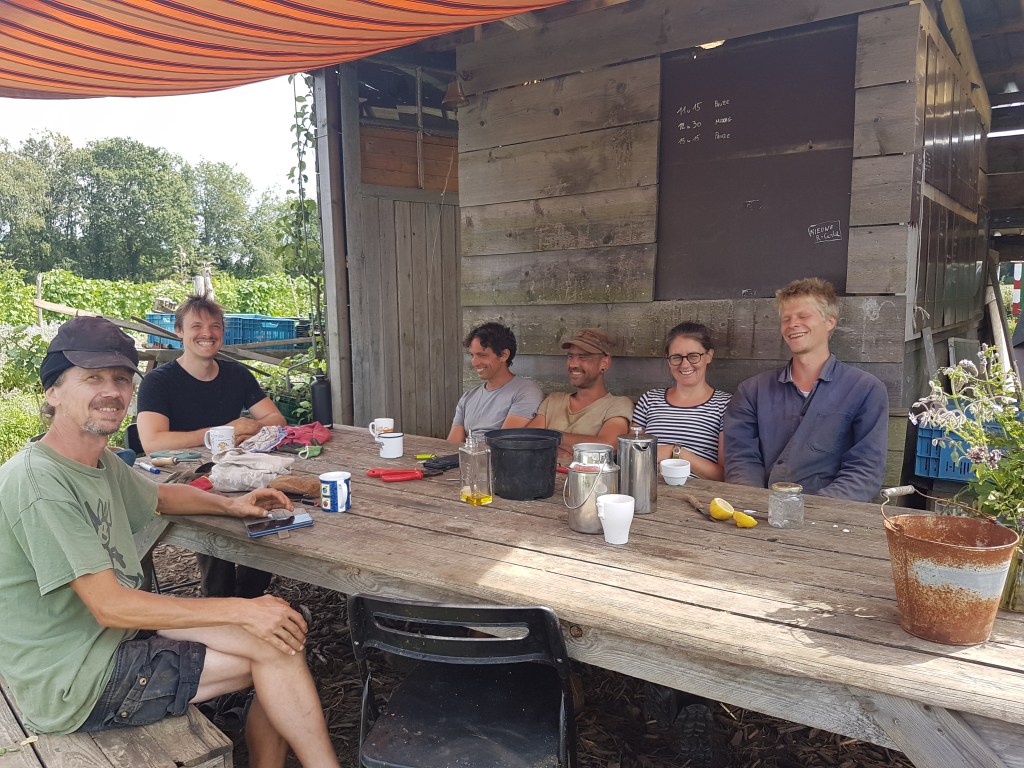
Most of us want to eat freshly grown fruit and vegetables which are free of pesticides, artificial fertilizers and genetic modifications. When it comes to the health of our families particularly children we are concerned with the harmful effects of chemicals that come with pesticides and artificial fertilizers. In addition to our own health, these chemicals also harm the earth and the environment. Food grown in a non-organic way also negatively affects sustainability. Further, the food transported from distant places adds to environmental pollution as energy is consumed by trucks, ships and aeroplanes as well as in packaging, cooling and storage.
We think about buying organic food but that’s quite expensive in markets. We may think of growing organic food but don’t have space, time and knowledge about growing food. When we think of organic farming a picture of difficult, unsurmountable tasks appears in our mind and the entire idea appears to be an undoable project.
But surprisingly it is not that difficult if you can find one of the Community Supported Agriculture (CSA) projects, which are active in many places in all three regions of Belgium. Farmer or no farmer you can make your dreams of growing your own food come true at this place.
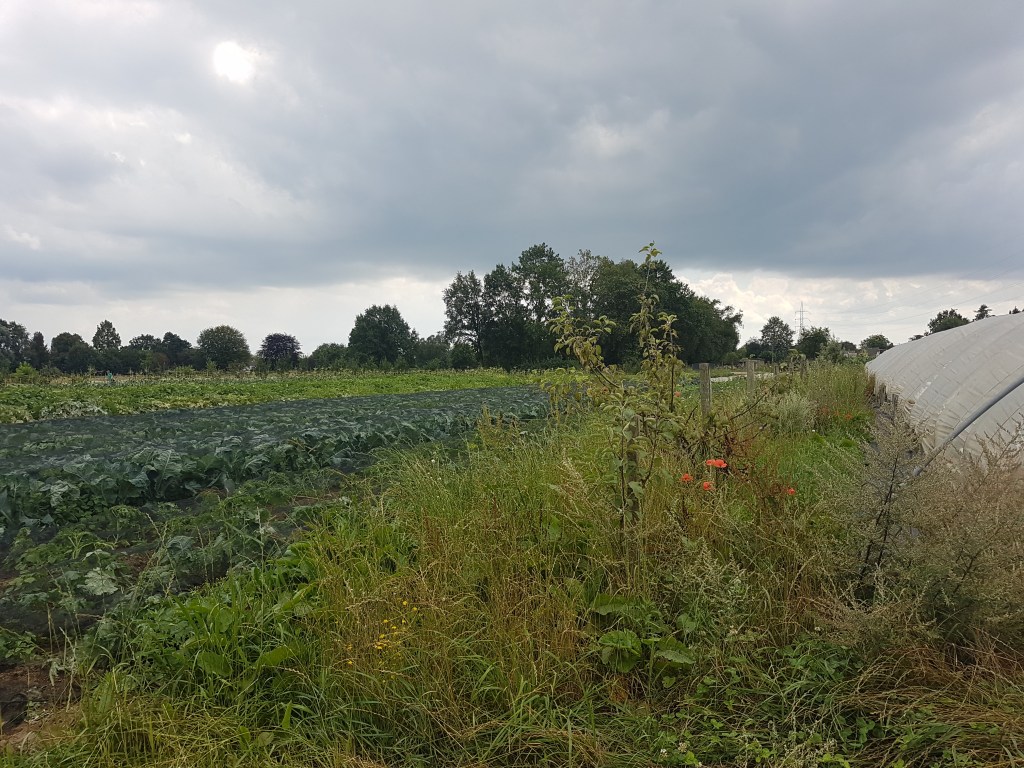
In my quest to grow organic food for a long time, I recently came across one such project being run by Loof and Bezen. I visited their farm located in Wommelgem, just 20 minutes away from Berchem a central location in the city of Antwerp.
Managed by three dedicated farmers, Tom, Ona and Kaat with the support of participants and volunteers, Loof and Bezen offers an amazing opportunity to get fresh locally grown organic vegetables, fruits and flowers and also to learn how to grow organically and actually participate in the entire process from sowing seeds to reap the harvest.

Spanning over 4.7 hectares, the farm has been active since 2019 on the model of crowdfunding and shared yield, informed Tom, while showing around different sections of the farm and explaining the working model. Every participant pays a small amount at the start of the year and gets a share of the harvest throughout the year every week fresh from the farm. A harvest year runs from April 1 to March 31 for all three categories, vegetables, fruits and flowers.
Loof and Bezen has the chance to secure land through De Landgenoten, giving them long-term security! This is a golden opportunity, for the organization and more so for local community, who are involved in agriculture and enjoy fresh healthy produce in the vicinity of their home. Their drive for crowdfunding to buy land can be visited on their page on De Landgenoten’s website (www.delandgenoten.be/loofenbezen) to make a donation (tax-deductible) or buy a share.
The amount of contribution is small. For instance, for vegetables, it comes to around only 9 euros per week for one adult. Farmers and participants at Loof and Bezen grow around 60 types of vegetables, enough to provide delicious fresh seasonal vegetables all year round. A participant can register alone or with the entire family, an adult pays a fixed amount, and a child’s contribution is determined based on his/her age. Children in co-parenthood or in student housing become members for half the price. The same goes for fruit and flowers. You pick up a variety of fruits and flowers throughout the year for a fixed amount paid at the beginning of the year.
Tom also showed me the fruit forest acknowledging Ona’s dedication to take up this segment, where they have planted trees of walnuts, almonds, hazelnuts and a wide range of berries.
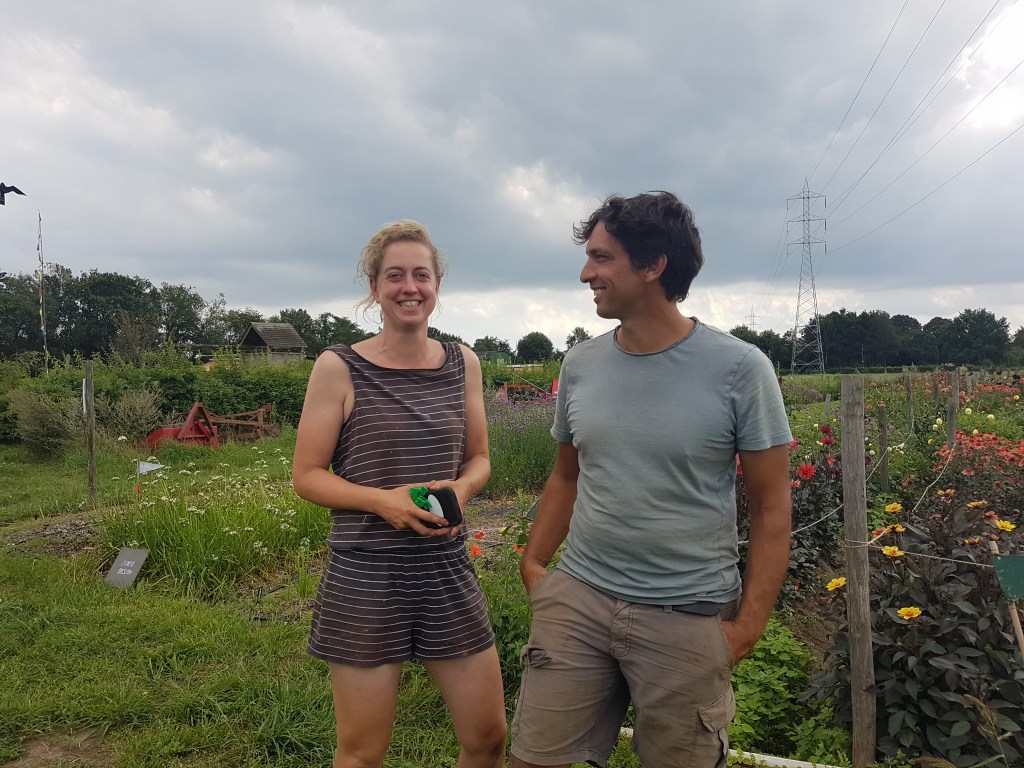
The beneficial effects of community-supported agriculture are reflected in an enthusiastic community. This is evident from the waiting list of participants. The participation has grown because participants are enjoying the benefit of farm not only themselves but are spreading the word among their communities.
“It’s wonderful to come here and harvest with my friends. We live in a busy city, and the peace and tranquillity here are incredible. As we walk through the fields, we take our time to look at all the vegetables that are ready to be harvested, and then we take the ones home we need to prepare a delicious meal that day. It’s truly fascinating to watch everything grow throughout the year. That you don’t see in the supermarket. It still happens from time to time that I’m pleasantly surprised when I discover a vegetable I’ve never seen before.”
Zeno, a participant at Loof and Bezen.
In the CSA model, farmers and participants work together to run a farm. As a participant you commit yourself to the farmer: at the start of the season, you pay an annual contribution. In return, you receive part of the harvest. The risks and rewards are thus shared. CSA farmers are committed to their participants to produce food for them in consultation with them, in all transparency and in an ecologically responsible manner.
When asked about challenges Tom pointed out that access to land is a critical issue.
“Finding land for new farmers, especially in the proximity of cities, is incredibly difficult. The land is either tied up or extremely expensive. We, too, are on uncertain ground. Open space in Flanders is scarce, and agricultural land, by definition ‘open’, is under pressure from all sides and is often sacrificed for non-agricultural purposes. Moreover, we see a concentration of land in the hands of already larger farmers… However, there’s also a rise in small-scale gardeners who sell directly to customers through short supply chains. CSA is a beautiful example of this.“
Loof and Bezen has the chance now to secure land through De Landgenoten, giving them long-term security! This is a golden opportunity, for the organization and more so for local community, who are involved in agriculture and enjoy fresh healthy produce in the vicinity of their home. Their drive for crowdfunding to buy land can be visited on their page on De Landgenoten’s website (www.delandgenoten.be/loofenbezen) to make a donation (tax-deductible) or buy a share.
Despite all the challenges associated with the agriculture sector and sustainable farming, CSAs are providing a great opportunity for people from non-farming backgrounds to enjoy locally grown fresh organic food at affordable prices and less effort to the communities through a participative model which takes into consideration choices of members while growing vegetables and fruits.
 CAST
CAST 