

By: Dr Syeda Sultana Rizvi
Lack of Government’s focus on Mitigation, Adaptation and Resilience Aggravates Sufferings of People
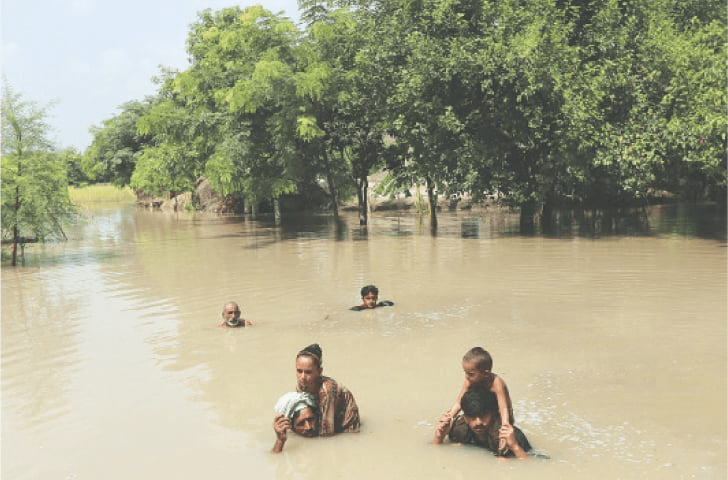
Floods in Pakistan have become increasingly recurrent and destructive, the causes may be multiple, the scale of devastation depends largely on how well the country prepares and responds. Pakistan’s flood risks stem from both natural factors, such as glacial melt and monsoon rains, and man-made issues including deforestation, poor planning, mismanaged water resources and excessive release of water by India not rivers of Pakistan.
The way forward lies in a three-pronged strategy of mitigation, adaptation, and resilience. Mitigation means reducing the drivers of climate change, such as greenhouse gas emissions, and lessening their impact. Adaptation focuses on adjusting to the consequences of climate impacts that are already happening. Resilience refers to the ability of communities and systems to recover and continue functioning despite climate shocks. Together, these strategies are essential for building a safer and more sustainable future.
Unfortunately, Pakistan’s efforts in mitigation have been limited. Despite vast potential for solar and wind energy, the country remains heavily reliant on fossil fuels. Many households have turned to solar panels privately, especially as electricity prices doubled between 2021 and 2024, yet government support has been lacking. In fact, the 2025 Solar Energy Policy made solar adoption less attractive by reducing the buyback price for surplus energy and restricting installation sizes. Meanwhile, deforestation continues at an alarming pace, with around 11,000 hectares lost each year. With only 5 percent of land under forest cover, Pakistan is left highly vulnerable to worsening floods, water shortages, and soil erosion. The Billion Tree Tsunami Project initiated by the former prime minister Imran Khan, showed promise but stalled with the toppling of Khan’s government .
Adaptation, the second pillar of climate strategy, has also been neglected. The 2025 floods revealed serious weaknesses in preparation. Despite warnings about glacial melt, cloudbursts, and changing monsoon patterns, little was done to strengthen flood defenses or improve water management. Investments in small and medium dams, which could both store water and generate clean energy, were largely ignored in favour of endless debates over the controversial Kalabagh Dam. Had more focus been placed on building reservoirs, diversion canals, and local preparedness, much of the damage could have been prevented.
Resilience, which determines how well communities recover from disasters, remains the weakest link. Pakistan’s disaster management authorities follow the approach of responding after crises rather than preventing them. Communities are rarely trained or equipped to handle emergencies, and proactive resilience-building is almost non-existent. This lack of preparedness leaves people dangerously exposed when floods strike.
Pakistan has developed several climate strategies and action plans, but the gap lies in implementation. Weak institutions, overlapping responsibilities, inconsistent funding, and heavy reliance on international donors hinder real progress. Climate risks are rarely factored into urban planning, while illegal construction on riverbeds and poor drainage systems worsen the situation in flood-prone areas. The devastating floods of 2025 made it clear that the country must move from reactive relief efforts to proactive planning.
For Pakistan to break this cycle, it needs to rethink its priorities. Stronger flood forecasting systems, real-time data monitoring, and accessible early-warning alerts could save countless lives. Investments in climate-resilient infrastructure such as upgraded dams and barrages are urgently needed, and drainage systems in urban centers like Karachi, Lahore, and Multan in particular require immediate attention. Nature-based solutions must also play a larger role, including wetland and mangrove restoration and preventing further encroachment on floodplains.
Political will and governance reforms are essential in this regard. A dedicated climate adaptation budget should replace the current reliance on emergency aid, and climate risk assessments must become mandatory for all major development projects. Communities themselves must be empowered through training, local disaster response units, and the promotion of climate-smart farming techniques such as flood-resistant seeds and crop insurance for small farmers.
Regional and international cooperation is another key factor. Pakistan should pursue financing from the Green Climate Fund and push for joint flood management with India, China, and Central Asian countries through regional platforms. Data-sharing agreements could improve forecasting, while partnerships with universities, NGOs, and private innovators could help develop low-cost, community-friendly solutions.
Unless Pakistan urgently reforms its approach, the country will continue to suffer repeated cycles of destruction. Moving beyond short-term relief to long-term adaptation and resilience is no longer optional; it is a necessity. Only through stronger governance, better planning, and cooperation at local, regional, and global levels can Pakistan protect its people and reduce the risks of future climate-driven disasters.
 CAST
CAST 